Flat Illustration Apps Development: Your Design Workflow Upgrade
You know that feeling when you're staring at a blank canvas, trying to build a landing page or social media campaign from scratch? The colors feel off, the layouts take forever, and nothing quite matches your brand vision. That's exactly where a well-crafted multipurpose flat illustration vector design steps in—not as a magic solution, but as a genuinely useful starting point that saves hours of work while keeping your creative options open.
What Makes Flat Illustration Apps Development So Effective
Flat illustration has become the visual language of modern digital communication. It strips away unnecessary detail, relying on clean shapes, bold colors, and intentional simplicity to convey ideas instantly. The style feels approachable and contemporary without trying too hard. Think of how Slack, Dropbox, and countless SaaS companies use flat illustrations to explain complex products in seconds—that's the same visual logic embedded in a template like this.
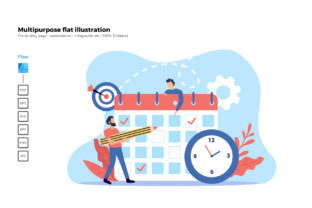
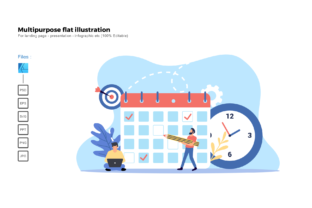
What sets a professional flat illustration vector design apart is its structure. Every element is built as a separate vector component, which means you're not just getting a pretty picture. You're getting editable building blocks: individual shapes, color layers, and grouped objects you can rearrange, recolor, or resize without quality loss. When a template ships in formats like AD, PSD, EPS, SVG, PPT, PNG, and JPG, it's designed to fit into real workflows—not just sit in a folder collecting dust.
Where This Template Actually Works
The practical applications go well beyond what most people expect. A blogger creating a media kit can drop these illustrations into a PDF and immediately look more polished. An entrepreneur building a pitch deck in PowerPoint can use the PPTX file to maintain visual consistency across every slide. A marketer designing Instagram carousels can export PNGs at the exact dimensions needed without wrestling with complex software.
Here's where I see this kind of template delivering the most value:
- Landing pages that need visual personality without commissioning custom artwork
- Business proposals where first impressions directly impact whether you get a callback
- Infographics that explain data or processes in a way people actually want to read
- Social media graphics for brands that need a consistent look across platforms
- Presentation design that moves beyond generic stock photos
- Marketing collateral like brochures, one-pagers, and email headers
- Blog post graphics that give content a professional, cohesive feel
The versatility matters because most creators aren't working in a single medium. You might need the same visual style on your website, your pitch deck, and your printed handouts. Having access to one unified illustration system across AD, PSD, EPS, SVG, and PPT files means you spend less time adapting and more time creating.
Editing Colors to Match Your Brand Identity
One of the most practical features of a vector-based flat illustration template is color editing. If your brand uses a specific teal, a particular warm gray, or a distinctive coral accent, you can adjust every element to match. In Affinity Designer or Photoshop, this typically takes minutes rather than hours. You select a shape, change its fill, and the entire illustration shifts to reflect your brand identity.
This matters more than people realize. Inconsistent visuals—where your website uses one color palette and your presentation uses another—create subtle friction. Your audience might not consciously notice, but they feel it. A cohesive color story across all touchpoints builds recognition and trust over time.
The beautiful color theme included in the package gives you a proven starting point. Even if you plan to customize everything, having a professionally balanced palette as a foundation means your adjustments are more likely to work harmoniously rather than clash.
Evaluating Whether This Fits Your Project
Not every project calls for flat illustration. If you're designing a luxury brand identity for a high-end jewelry line, you might lean toward photography or detailed illustration work instead. Flat illustration excels when you need clarity, friendliness, and modern appeal. It works beautifully for tech companies, educational content, health and wellness brands, startups, and any project where approachability matters more than ornate detail.
Before committing, ask yourself a few questions:
- Does the illustration style align with the personality of my brand or project?
- Will I actually use multiple file formats, or do I just need SVG and PNG?
- Do I have the software to edit vector files, or am I comfortable using the pre-made exports?
- Does the color theme work as-is, or will I need to customize it significantly?
The documentation included in the package helps answer these questions practically. A good template comes with a complete guide that walks you through opening files, editing elements, and exporting for different use cases. That guidance is especially valuable if you're not a full-time designer but still want professional results.
Working With Multiple File Formats
The range of included formats—AD, PSD, EPS, PPTX, SVG, PNG, JPG, and PDF—reflects how real creative work happens across different tools. Affinity Designer files serve as the primary editing source. Photoshop files work for designers who prefer that environment. EPS and SVG maintain scalability for print and web. PowerPoint files let non-designers integrate illustrations into presentations without additional software.
PNG and JPG exports are ready to use immediately, which is perfect for bloggers and content creators who need quick graphics for posts, newsletters, or social media. The PDF documentation ties everything together, making the package feel complete rather than fragmented.
This kind of thoughtfulness in file preparation reflects genuine understanding of how design assets get used in practice. You're not just buying an illustration—you're buying flexibility across your entire creative workflow.
Making It Your Own
The best use of any template is as a foundation, not a finished product. Take the flat illustration elements, adjust the colors to your brand, rearrange compositions to fit your layout, and combine them with your own typography choices. When you treat a well-built template as raw material rather than a final deliverable, the results feel genuinely original.
Pair these illustrations with a clean sans serif font for a modern tech feel, or combine them with a friendly handwritten font for a more personal, approachable tone. The flat style is inherently versatile in how it plays with different typeface choices, making it a reliable component in broader visual hierarchy and brand identity systems.
That's the real value here: not a shortcut, but a smart starting point that respects your time while keeping creative control firmly in your hands.