Streamline Your Visuals with Flat Illustration Logistic
In the digital space, capturing attention requires more than just text; it demands visual storytelling. Whether you are building a landing page for a new startup or creating a pitch deck for investors, the imagery you choose defines your brand's first impression. This is where the concept of "Flat Illustration Logistic" comes into play. It is not just a design style; it is a strategic asset for modern businesses, particularly those in e-commerce, tech, and supply chain sectors.
Flat illustration has become a dominant force in modern typography and graphic design because of its clarity. Unlike realistic 3D renders or complex photographs, flat design strips away unnecessary details—gradients, shadows, and textures—to focus on the essential message. When applied to logistics, this style communicates efficiency, movement, and reliability without visual clutter. The "Flat Illustration Logistic" template takes this aesthetic and packages it into a versatile, 100% editable vector file, making it a powerful tool for entrepreneurs and designers alike.
The Anatomy of a Modern Design Asset
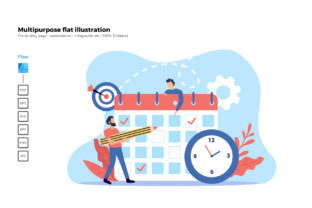
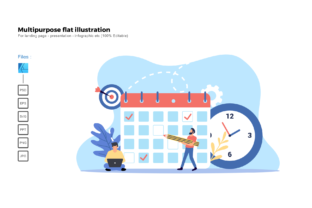
What exactly makes this style so appealing? At its core, flat illustration relies on clean lines, geometric shapes, and bold, cohesive color palettes. It creates a friendly, approachable atmosphere that feels distinctly modern. In the context of logistics, these illustrations often depict trucks, warehouses, packages, and workers in a stylized, abstract manner. This abstraction allows viewers to focus on the concept—delivery, speed, organization—rather than getting distracted by photographic details.
The visual personality of Flat Illustration Logistic is one of optimism and competence. It feels professional yet playful. For a content creator or small business owner, this balance is crucial. You want your audience to trust your operational capabilities, but you also want to appear accessible. This template achieves that by using vibrant colors and simplified human figures, which helps in humanizing complex business processes. It transforms dry topics like supply chain management or inventory tracking into engaging visual narratives.
Practical Applications for Entrepreneurs and Designers
The true value of a design asset lies in its adaptability. This vector template is designed for multipurpose use, meaning you are not locked into a single application. For a blogger writing about e-commerce trends, these illustrations serve as perfect featured images or in-post graphics that break up long walls of text. For a marketer creating a social media campaign, the bold colors and simple shapes ensure the graphics are legible even on small mobile screens.
Consider the needs of an entrepreneur pitching to venture capitalists. A presentation filled with stock photos can look generic and uninspired. However, using a consistent set of flat illustrations creates a cohesive brand identity throughout the deck. It shows that you care about the details and understand visual communication. Similarly, in web design, these vectors can be used to guide the user’s eye down the page, illustrating the customer journey from order placement to delivery.
Customization: Making It Your Own
One of the biggest hurdles with generic stock imagery is the inability to edit it. If a stock photo features a delivery van in red, but your brand colors are blue and grey, you are stuck with a mismatch. The Flat Illustration Logistic template solves this by offering 100% editable vectors. Because it comes in formats like SVG, EPS, and Affinity Designer files, you have complete control over every anchor point and color swatch.
This level of customization is vital for maintaining brand consistency. You can easily match the illustrations to your corporate identity, ensuring that your landing pages, proposals, and infographics all speak the same visual language. Whether you use Adobe Illustrator, Affinity Designer, or even PowerPoint for quick mockups, the file compatibility ensures a smooth workflow. This flexibility transforms the asset from a simple image into a core component of your design system.
Enhancing User Experience and Engagement
Visual hierarchy is a fundamental principle of graphic design. It dictates the order in which the human eye perceives what it sees. Flat illustrations are excellent tools for establishing this hierarchy. Because they lack the noise of realistic textures, they can be sized effectively to act as section headers or focal points. When a user lands on your page, a well-placed illustration can immediately communicate the topic—logistics and movement—before they even read a single headline.
Furthermore, this style supports readability. By using flat graphics to separate content blocks, you give the reader's eyes a rest. This is particularly important in editorial design and long-form blog posts. The illustrations act as visual anchors, keeping the reader engaged and preventing them from bouncing off the page. In an era of short attention spans, keeping your audience visually stimulated is just as important as the quality of your writing.
Technical Versatility
The package includes a wide range of file formats—AD, PSD, EPS, SVG, PPT, PNG, and JPG. This variety is not just a technical specification; it is a practical necessity for the modern creative. Need to quickly drop an image into a Canva social media post? Use the PNG. Need to create a large-format banner for a trade show? The vector files (EPS/SVG) will scale infinitely without losing quality. Need to edit the composition for a specific ad layout? Open the PSD or AD file.
This comprehensive documentation and file support remove the technical barriers that often frustrate non-designers. Even if you are a hobbyist or a small business owner without advanced design skills, the inclusion of organized layers and clear guides makes the editing process intuitive. You do not need to be a vector wizard to make these assets work for you.
Why This Template Stands Out
There are countless design assets available online, but few offer the combination of aesthetic appeal and functional depth found in this package. It is more than just a collection of drawings; it is a toolkit for visual communication. The "Beautiful creative things" mentioned in the description refer to the thoughtful composition of the scenes. These are not random shapes; they are carefully constructed narratives about business growth and operational success.
For those concerned about licensing and usage, the package clearly defines what you receive. This transparency is essential for commercial use, allowing you to use the assets in client work, merchandise, or digital products with confidence. Ultimately, investing in high-quality, editable design assets like the Flat Illustration Logistic template is an investment in your brand's professional image. It bridges the gap between a DIY aesthetic and a polished, agency-level presentation, giving you the visual tools to compete in a crowded marketplace.