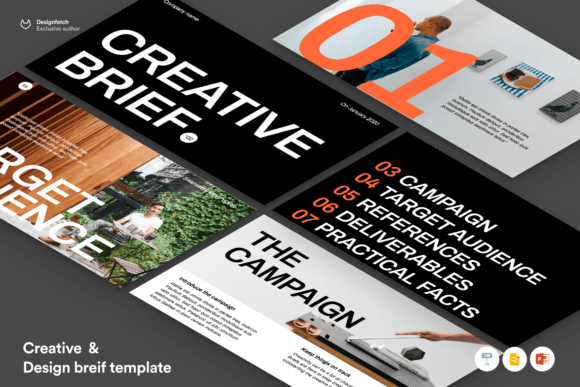
Creative Design Brief Template: The Agency's Game Plan
You don't need 600 slides to make a presentation pop. In fact, most of the time, that kind of volume is the fastest way to lose your audience's attention and your project's focus. For agencies, freelancers, and creative teams, the most critical document isn't a sprawling deck; it's a sharp, strategic Creative Design Brief Template. This straightforward presentation tool serves as the foundational game plan, ensuring everyone—from the designer to the client—is aligned on the mission before a single pixel is pushed.
More Than a Document: A Visual Roadmap
Think of a Creative Design Brief Template not as a boring form to fill out, but as the visual cornerstone of your project's brand identity. Its personality should be professional yet approachable, structured yet flexible. The best templates avoid clutter, using clean layouts, ample white space, and a cohesive colour palette that reflects modern typography trends. This isn't just about looking good; it's about function. A well-designed brief uses clear visual hierarchy—through headings, subheadings, and bullet points—to guide the reader's eye to the most important details: the campaign's core mission, the target audience's pain points, and the non-negotiable deliverables.
The style often leans towards a minimalist or contemporary aesthetic, employing a clean sans serif font for body text to ensure maximum readability, paired with a more distinctive display font or serif font for headings to add a touch of sophistication. This combination creates a professional tone that builds client trust from the first glance. The overall appeal lies in its ability to communicate complex information simply, transforming a potentially overwhelming project scope into a clear, actionable plan.
Where This Template Truly Shines
The utility of a robust Creative Design Brief Template spans nearly every corner of the creative and commercial landscape. Its primary home is within agency work, where it acts as the central nervous system for branding, advertising, and marketing campaigns. It’s the document that translates a client's vague idea into a concrete creative brief for the team.
Beyond agencies, its applications are vast:
- Branding & Logo Design: It defines the brand's voice, values, and visual direction before the first sketch is drawn.
- Editorial & Publishing: Editors and art directors use it to brief illustrators and photographers for magazine features or book covers.
- Digital & Web Design: It outlines user personas, key functionality, and the desired emotional response for a website or app.
- Packaging & Product Design: It ensures the packaging communicates the right shelf appeal and brand story.
- Social Media & Marketing: It aligns a multi-platform campaign, ensuring consistent messaging in social media graphics, videos, and ads.
- Freelancers & Small Business Owners: It helps structure client onboarding and sets clear expectations, preventing scope creep.
Essentially, any project where multiple stakeholders need to agree on "what we're doing and why" benefits from this structured approach. It’s a universal design asset for bringing order to creative chaos.
The Strategic Impact on Your Project's Success
Implementing a Creative Design Brief Template does more than just organize information; it actively shapes the project's outcome. It directly influences readability of the project goals and visual hierarchy of the work itself. When the brief is clear, the resulting design work is more focused.
This clarity has a ripple effect:
- Brand Perception & Consistency: A thorough brief ensures every creative touchpoint, from a business card to a billboard, reinforces the same brand identity. This consistency builds recognition and professionalism.
- Audience Engagement: By rigorously defining the target audience in the brief, you force the creative work to speak directly to that group's needs and desires, leading to higher engagement.
- Efficiency & Alignment: It drastically reduces revisions and miscommunication. The team works from a shared understanding, saving time and budget.
- Professional Recognition: Presenting a polished, well-structured brief signals to clients that you are a strategic partner, not just a service provider.
Choosing and Using Your Template Wisely
Not all templates are created equal. When selecting a Creative Design Brief Template, evaluate it like any other piece of modern typography or design. Look for a logical flow that matches your process. Does it start with background and move to objectives and then deliverables? The structure should feel intuitive.
Test the font pairing within the template. Is the body copy font legible at small sizes? Does the heading font have enough weight and personality to create clear sections without being distracting? Consider if the template offers enough flexibility—can you easily add or remove sections to fit different project types? A great template should feel like a starting point, not a rigid cage.
Finally, consider the practicalities. If you're using a premium font or a creative font within the template, ensure you understand the commercial licensing